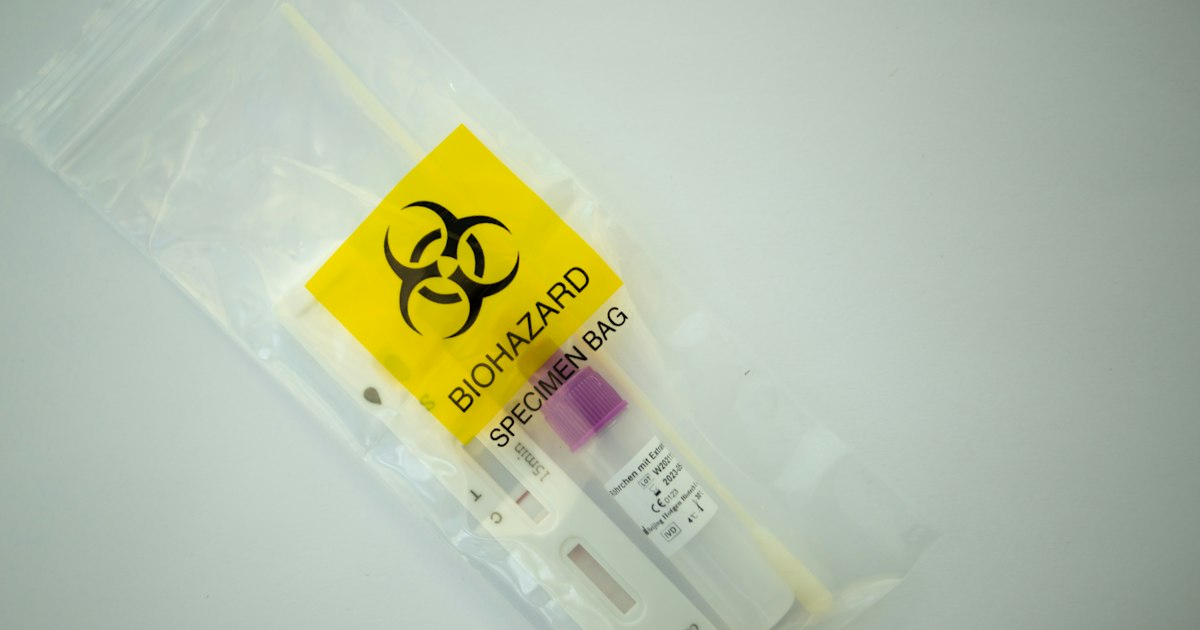
Fasting insulin and the HOMA-IR index: what the test shows and why it matters for athletes

Fasting insulin and the HOMA-IR index calculated from it are popular tests, often ordered to assess insulin resistance. Athletes are interested in them from two angles: as a marker of metabolic health and as a way to understand how efficiently the body works with carbohydrates. The editorial team explains what exactly the test measures, how the index is calculated and where the limits of its capabilities lie.
Insulin: briefly about the main anabolic hormone
Insulin is produced by the beta cells of the islets of Langerhans in the pancreas. Its main task is to lower the level of glucose in the blood after eating, «opening» muscle and fat cells to it and stimulating the storage of glycogen in the liver and muscles. At the same time, insulin inhibits the breakdown of fat and protein, which is why it is called the body's main anabolic hormone.
On an empty stomach, when no food has come in for 8–12 hours, insulin is maintained at a low basal level. This is enough to restrain excessive release of glucose from the liver. It is precisely the basal level that the «fasting insulin» test measures — in laboratories most often in µU/mL (µIU/mL) or in pmol/L.
Insulin sensitivity is how strongly tissues respond to a certain amount of the hormone. When sensitivity is high, a small amount of insulin is enough to maintain normal glucose. When tissues become «deafer», the pancreas compensates for this by producing more of the hormone. This state is called insulin resistance.
The key point: in the early stages of insulin resistance fasting glucose is still normal, because the pancreas «pulls» the situation with increased secretion. Therefore elevated fasting insulin can become a signal earlier than changes in glucose appear — this is precisely the practical value of the test.
What HOMA-IR is and how it is calculated
HOMA (Homeostasis Model Assessment) is a mathematical model proposed by Matthews and co-authors in 1985. It makes it possible, from two simple fasting indicators — glucose and insulin — to assess insulin resistance (HOMA-IR) and beta-cell function (HOMA-B). Most often the simplified formula of the first version of the model is used.
| Parameter | Value |
|---|---|
| Formula | HOMA-IR = fasting glucose (mmol/L) × fasting insulin (µU/mL) / 22.5 |
| Example calculation | 5.0 × 6 / 22.5 ≈ 1.3 |
| What «1» means | The conditional sensitivity of a «reference» healthy young person in the original model |
| Typical thresholds in practice | Most often 2.5–2.7, but there is no single international standard |
| Alternative indices | QUICKI, HOMA2 (a computer model), the Matsuda index from glucose tolerance test data |
The higher the HOMA-IR, the more insulin the body needs to maintain the same glucose, that is, the lower the insulin sensitivity. However, the threshold figures vary depending on the population, age and the method of measuring insulin. Wallace, Levy and Matthews (2004) specifically warned against mechanically transferring thresholds between laboratories and studies.
The «gold standard» for assessing insulin sensitivity remains the hyperinsulinemic euglycemic clamp (DeFronzo et al., 1979) — a labor-intensive procedure with a constant infusion of insulin and glucose. HOMA-IR correlates with it, but this is only an indirect assessment, suitable for screening and monitoring over time, not for precise measurements in an individual.
It is worth understanding that HOMA-IR reflects mainly hepatic insulin resistance in the fasting state. It characterizes the sensitivity of skeletal muscles after eating worse, and it is precisely the muscles that are the main «consumer» of glucose in a physically active person.
How training affects insulin sensitivity
Physical activity is one of the most powerful non-drug ways to increase insulin sensitivity. Muscle contraction in itself triggers the movement of GLUT4 glucose transporters to the cell membrane, independently of insulin. After training the muscles actively replenish glycogen stores for a long time and respond better to the hormone.
A review by Bird and Hawley (2017) summarizes that an improvement in insulin sensitivity after a single training session is noticeable already within the next day or two, while regular exercise provides a lasting effect. Both aerobic and strength loads work; a combination of the two usually gives the best result.
Because of this, in trained people, especially in endurance sports, fasting insulin and HOMA-IR are often very low. For them these indicators are usually not a problem but, on the contrary, reflect good metabolic adaptation.
At the same time, a few days of complete inactivity — injury, a break between seasons, illness — can noticeably reduce insulin sensitivity even in an athlete. Therefore the indicator should be assessed taking into account what phase of the training process the person is in.
Who needs this test and why
For most young athletes with a normal body mass there is no need to determine fasting insulin without indications. However, in a number of situations the test is useful for assessing metabolic health and planning nutrition.
- Strength sports and heavy weight categories:a large percentage of fat, especially visceral, is associated with insulin resistance even with significant muscle mass.
- A family history of type 2 diabetes:early detection of changes gives time for correction.
- Polycystic ovary syndrome in female athletes:insulin resistance is often part of this condition.
- End of a career:a sharp decrease in loads without a change in nutrition is a well-known factor in gaining fat and worsening metabolism.
- Taking drugs that affect carbohydrate metabolism:for example, systemic corticosteroids, and also growth hormone, for which a worsening of insulin sensitivity has been described.
A diagnosis of «diabetes mellitus» or «prediabetes» is established not by HOMA-IR but by fasting glucose, glycated hemoglobin HbA1c or an oral glucose tolerance test — in accordance with the standards of the American Diabetes Association. Insulin and HOMA-IR only supplement this picture.
Separately we note: exogenous insulin is included in the WADA Prohibited List, and its non-medical use in sport is associated with a risk of severe hypoglycemia, which can lead to death. The fasting insulin test is not intended and not suitable for «monitoring» such use.
Limitations of the method and correct preparation
Insulin is a hormone with pulsatile secretion and a pronounced reaction to food, stress and exertion. Therefore the accuracy of the result largely depends on preparation. The editorial team advises following these rules.
- Give blood strictly on an empty stomach, after 8–12 hours without food; you may drink only water.
- Do not do intense training the evening before or in the morning before the test.
- Avoid an unusually abundant or, on the contrary, very carbohydrate-poor dinner before the test.
- Give glucose and insulin at the same time, from one tube or one draw, so that HOMA-IR is correct.
- Tell the doctor about taking medications, in particular metformin, corticosteroids, biotin in high doses (may affect some immunoassays).
The methods for determining insulin in different laboratories are not fully standardized, so results obtained in different places may differ. For monitoring over time it is better to use a single laboratory.
Finally, one should remember physiological variability: repeated measurements of fasting insulin in the same person can differ substantially. A single value at the edge of normal is not a diagnosis but grounds for repeating the study and looking at the broader picture.
Editorial conclusions
Fasting insulin reflects how much of the hormone the body needs to maintain normal glucose, and HOMA-IR turns this into a simple insulin resistance index.
It is a convenient screening tool but not a diagnostic test: the thresholds are not standardized, and the result is sensitive to preparation and the measurement method.
Regular training is one of the best «medicines» for insulin sensitivity, so in trained people the indicators are usually low. Elevated values in an athlete are grounds for reviewing body composition and nutrition and discussing the result with a doctor.
We also recommend reading our materials on the causes of HOMA-IR deviations from normal, on glycated hemoglobin, and on the lipid panel for athletes.
References
- Matthews DR, Hosker JP, Rudenski AS, et al. Homeostasis model assessment: insulin resistance and beta-cell function from fasting plasma glucose and insulin concentrations in man. Diabetologia. 1985;28(7):412–419.
- Wallace TM, Levy JC, Matthews DR. Use and abuse of HOMA modeling. Diabetes Care. 2004;27(6):1487–1495.
- DeFronzo RA, Tobin JD, Andres R. Glucose clamp technique: a method for quantifying insulin secretion and resistance. Am J Physiol. 1979;237(3):E214–E223.
- Katz A, Nambi SS, Mather K, et al. Quantitative insulin sensitivity check index: a simple, accurate method for assessing insulin sensitivity in humans. J Clin Endocrinol Metab. 2000;85(7):2402–2410.
- Bird SR, Hawley JA. Update on the effects of physical activity on insulin sensitivity in humans. BMJ Open Sport Exerc Med. 2017;2(1):e000143.
- American Diabetes Association. Standards of Care in Diabetes. Diabetes Care. Щорічний додаток (Suppl 1).
- World Anti-Doping Agency. The World Anti-Doping Code: International Standard. Prohibited List. Montreal: WADA; щорічне видання.
Andriy Melnyk
A strength-sports coach and author of programs for beginner and intermediate levels. Writes about training planning.